
What is Lower Cross Syndrome?
Lower Cross Syndrome (LCS) is a postural and muscular imbalance that affects the lower back, pelvis, and hips.
It occurs when certain muscles become tight (such as the hip flexors and lower back muscles) while others become weak
(such as the abdominal and gluteal muscles). This imbalance leads to excessive arching of the lower back, pelvic tilt,
lower back pain, hip tightness, and reduced functional movement. LCS is common in people with sedentary lifestyles, poor posture,
or repetitive movement patterns.
Symptoms
- Excessive lower back arch (hyperlordosis)
- Anterior pelvic tilt
- Lower back pain and stiffness
- Tight hip flexors and lower back muscles
- Weak abdominal and gluteal muscles
- Reduced hip mobility
- Pain with prolonged standing or walking
- Postural fatigue
Causes of Lower Cross Syndrome
- Prolonged sitting and sedentary lifestyle
- Poor posture and ergonomic habits
- Weak core and glute muscles
- Tight hip flexors from seated positions
- Repetitive lifting or improper movement mechanics
- Muscle imbalances from training or daily activities
Diagnosis
Diagnosis involves assessing posture, pelvic alignment, lumbar mobility, muscle tightness, and strength imbalances.
Functional movement tests help identify patterns contributing to LCS.
Treatment & Rehabilitation Approach
At AwaHope, treatment focuses on correcting muscular imbalances, improving pelvic alignment, strengthening weak muscles,
and restoring proper movement patterns. Rehabilitation is personalized to each patient’s posture, mobility, and lifestyle.
Treatment Methods
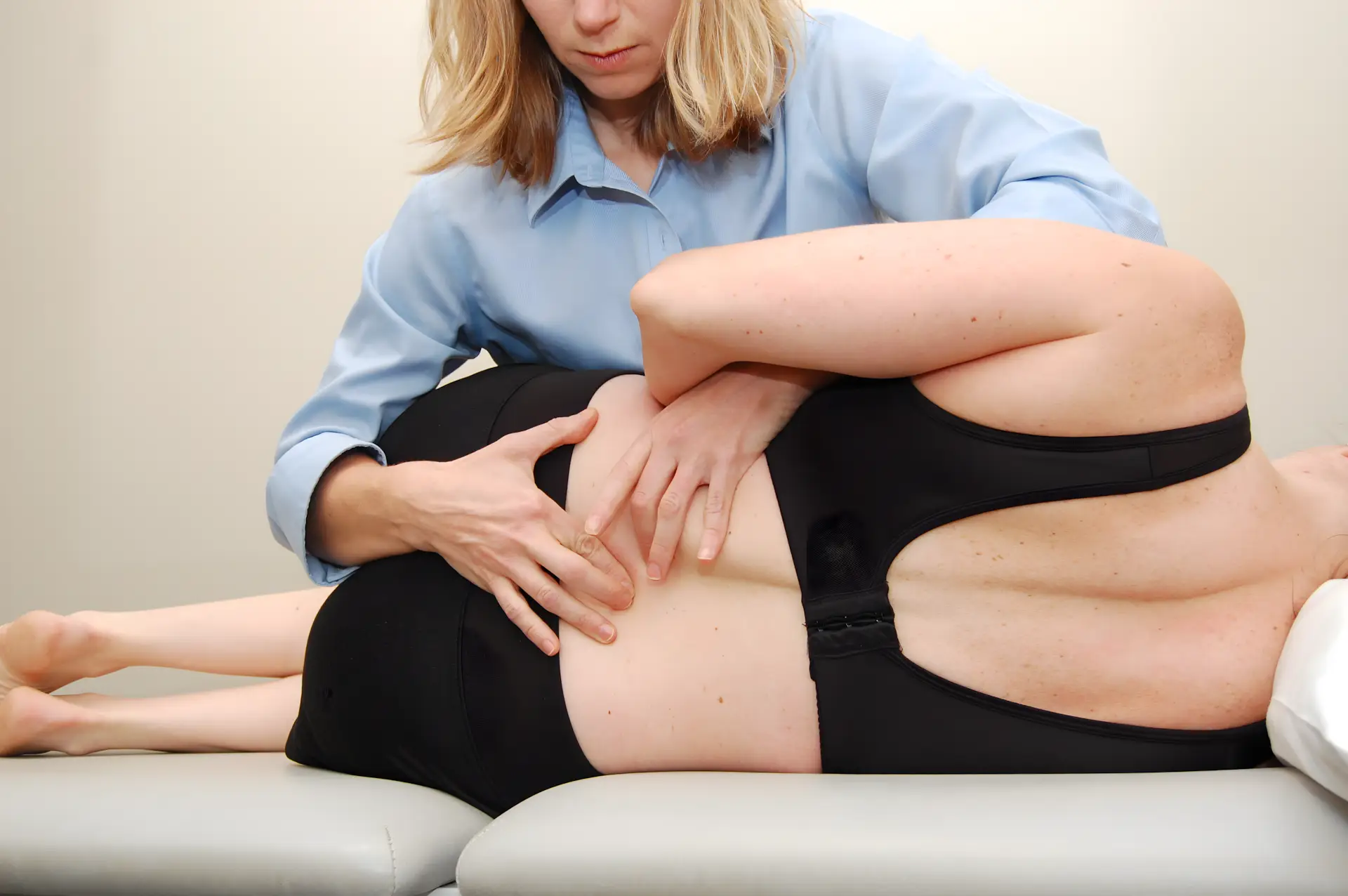
1. Manual Therapy
- Soft tissue release for tight hip flexors and lumbar muscles
- Myofascial release to improve mobility around the pelvis
- Joint mobilization to restore lumbar and hip mechanics
2. BTL TECAR Therapy
Reduces muscle tightness, inflammation, and pain in the lumbar and hip regions, while enhancing circulation and healing.
3. BTL Ultrasound Therapy
Helps reduce deep muscle stiffness and improves flexibility in tight soft tissues around the pelvis.
4. BTL Electrotherapy
Provides pain relief, reduces muscle spasms, and improves neuromuscular activation in weak or overactive muscles.
5. Stretching & Mobility Exercises
Programs include:
- Hip flexor and lower back stretching
- Hamstring and quadriceps flexibility training
- Lumbar and pelvic mobility drills
6. Strengthening & Core Stabilization
- Deep core muscle activation
- Glute strengthening to support pelvic alignment
- Stabilization exercises for the lumbar spine
- Hip strengthening to improve movement balance
7. Posture & Movement Retraining
- Correcting anterior pelvic tilt
- Training on proper standing, lifting, and sitting posture
- Ergonomic adjustments for daily and work activities
8. Heat & Cold Therapy
- Heat to relax tight lumbar and hip muscles
- Cold to reduce inflammation during flare-ups
Recovery & Expectations
Most patients experience significant improvements in posture, mobility, and pain levels with consistent physiotherapy.
Strengthening the core and glute muscles, combined with stretching tight areas, is essential for long-term correction.
In Our Centre…
At AwaHope, we use advanced physiotherapy technologies, skilled manual therapy, and customized exercise programs
to correct Lower Cross Syndrome effectively. Our goal is to restore balanced posture, improve functional movement,
and support long-term spinal and pelvic health.






