
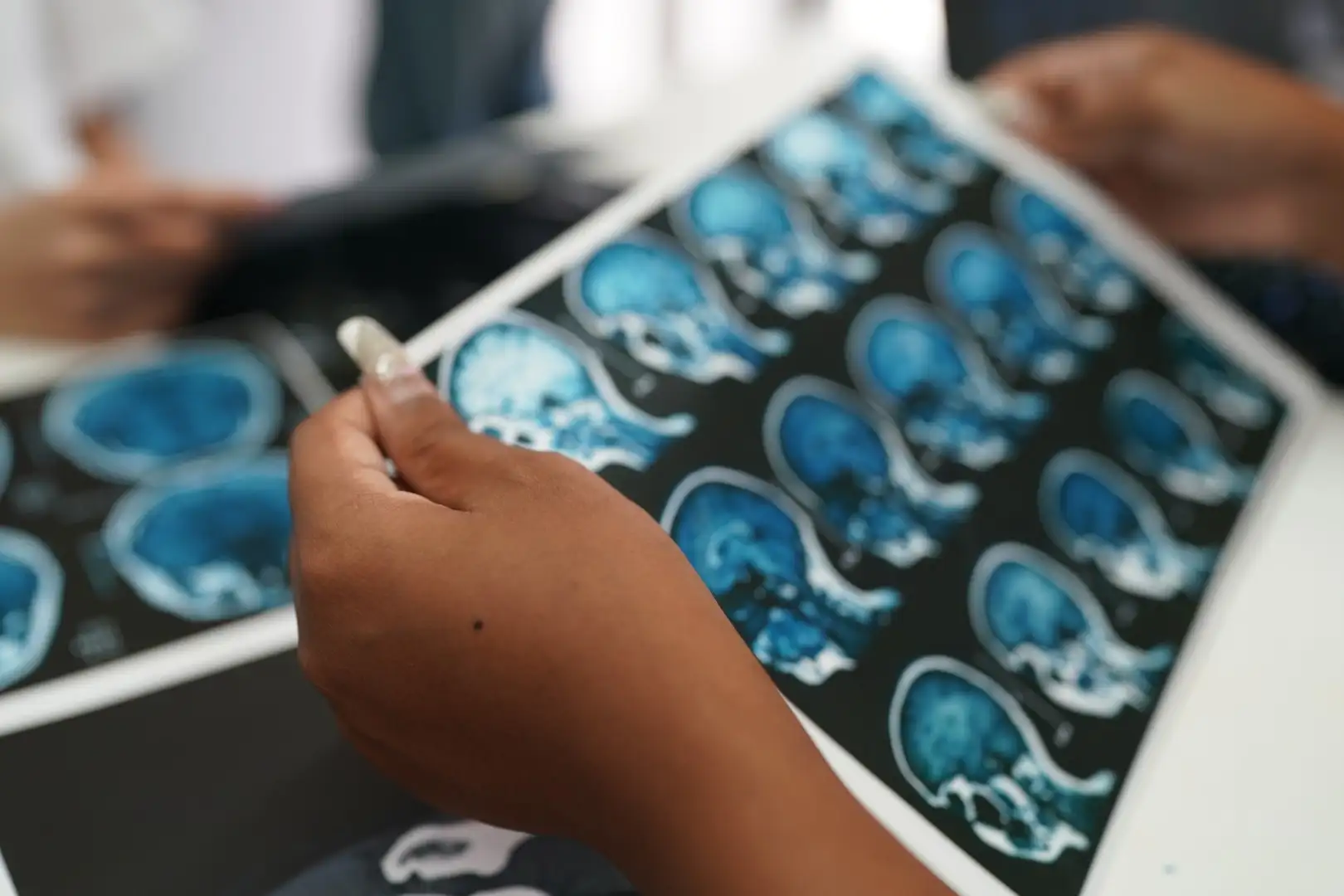
What is Brain Injury Rehabilitation?
Brain Injury Rehabilitation is a specialized program designed for individuals recovering from traumatic or acquired brain injuries,
including concussion, traumatic brain injury (TBI), stroke-related brain damage, hypoxia, infections, and other neurological events.
A brain injury can affect movement, balance, coordination, cognition, speech, and emotional regulation.
Rehabilitation helps the brain re-learn skills, build new neural pathways, and restore independence through structured therapy.
Common Effects of Brain Injury
- Weakness or limited movement in arms or legs
- Reduced balance and coordination
- Difficulty walking or maintaining posture
- Muscle tightness or spasticity
- Problems with memory, attention, or concentration
- Headaches, dizziness, or visual disturbances
- Fatigue and reduced endurance
- Communication or speech difficulties
- Behavioral or emotional changes
Goals of Brain Injury Rehabilitation
- Improve mobility, balance, and functional movement
- Restore strength and coordination
- Enhance cognitive and perceptual abilities
- Manage muscle tone and prevent contractures
- Improve daily activity performance and independence
- Support emotional and psychological recovery
- Promote safe reintegration into home, school, or work
Our Rehabilitation Approach
At AwaHope, brain injury rehabilitation is personalized based on the severity of injury, medical stability,
functional limitations, and patient goals.
We combine neurophysiotherapy, advanced technologies, and functional training to optimize recovery.
Treatment Methods
1. Neurophysiotherapy & Motor Re-education
- Exercises to re-learn controlled movements
- Neuromuscular facilitation to activate weak or inactive muscle groups
- Repetition-based training to encourage brain reorganization (neuroplasticity)
2. Balance, Coordination & Gait Training
- Postural control exercises
- Static and dynamic balance tasks
- Safe gait training on level surfaces, steps, and uneven ground
- Training with assistive devices as needed
3. Strengthening & Conditioning
- Strengthening available muscle groups to restore functional movement
- Core and trunk strengthening for improved stability
- Endurance training to increase activity tolerance
4. Spasticity & Muscle Tone Management
- Stretching routines to maintain joint flexibility
- Positioning strategies to reduce abnormal tone
- Splinting or bracing when necessary
5. Cognitive & Perceptual Rehabilitation (in cooperation with specialists)
- Attention and concentration training
- Memory and problem-solving tasks
- Visual-perceptual retraining
- Strategies to improve planning and organization
6. BTL Technologies in Brain Injury Rehabilitation
- BTL Electrotherapy: for neuromuscular activation and pain reduction
- BTL TECAR Therapy: to relieve muscle tightness and improve circulation
- BTL Ultrasound Therapy: to decrease soft tissue stiffness and support mobility
7. Functional Training for Daily Activities
- Training for transfers, sitting, standing, and walking
- Practice with self-care tasks such as dressing and grooming
- Improving independence in home and community settings
8. Sensory Re-education
- Techniques to improve tactile, proprioceptive, and visual-motor feedback
- Training to enhance hand function and coordination
9. Education, Family Involvement & Psychological Support
- Caregiver training for safe assistance
- Guidance on long-term home programs
- Support for emotional well-being and coping
- Strategies to create a safe and supportive environment for recovery
Recovery & Expectations
Brain injury recovery varies widely depending on severity, location, and time since injury.
With consistent physiotherapy, many patients regain significant independence and functional abilities.
Progress may be gradual, but structured rehabilitation and family involvement strongly improve long-term outcomes.
In Our Centre…
At AwaHope, we provide comprehensive Brain Injury Rehabilitation using advanced neurophysiotherapy techniques,
cutting-edge equipment, and personalized care to support every stage of recovery.
Our goal is to help patients regain confidence, mobility, and independence in daily life.






