
What is an Intervertebral Disc Bulge?
An intervertebral disc bulge occurs when the outer layer of a spinal disc weakens, causing the disc to extend outward.
Unlike a herniated disc, the inner gel does not break through, but the bulging disc can still compress nearby nerves and cause pain.
Disc bulges commonly occur in the cervical (neck) and lumbar (lower back) regions and may result from aging, poor posture,
repetitive strain, or trauma.
Symptoms
- Localized neck or lower back pain
- Pain radiating to the shoulders, arms, buttocks, or legs
- Tingling or numbness in the limbs
- Muscle weakness in severe cases
- Stiffness and reduced spinal mobility
- Pain worsened by bending, lifting, or sitting
Causes of Disc Bulge
- Natural disc degeneration with age
- Poor posture and prolonged sitting
- Repetitive bending or heavy lifting
- Weak core and spinal stabilizing muscles
- Trauma or sudden spinal stress
- Genetic predisposition to disc weakness
- Improper movement mechanics
Diagnosis
Diagnosis includes a clinical assessment of posture, mobility, nerve function, and pain response.
External imaging such as MRI is commonly used to confirm the presence and location of a disc bulge.
Treatment & Rehabilitation Approach
At AwaHope, rehabilitation focuses on relieving nerve compression, reducing inflammation, improving spinal mobility,
and strengthening core and back muscles. Treatment plans are customized based on the severity and location of the disc bulge.
Treatment Methods
1. Manual Therapy
- Spinal mobilization to improve joint movement
- Soft tissue release to reduce muscle tension
- Myofascial techniques to improve flexibility and reduce discomfort
2. Spinal Decompression Therapy
Gently stretches the spine to reduce pressure on the bulging disc and relieve nerve irritation.
3. BTL TECAR Therapy
Provides deep thermal stimulation that reduces inflammation, relaxes muscles, and supports disc healing.
4. BTL Ultrasound Therapy
Helps decrease soft tissue irritation and improve mobility around the affected spinal segment.
5. BTL Electrotherapy
Reduces pain, controls muscle spasms, and enhances neuromuscular function.
6. Nerve Gliding Exercises
Helps improve nerve mobility and reduce symptoms such as tingling, numbness, and radiating pain.
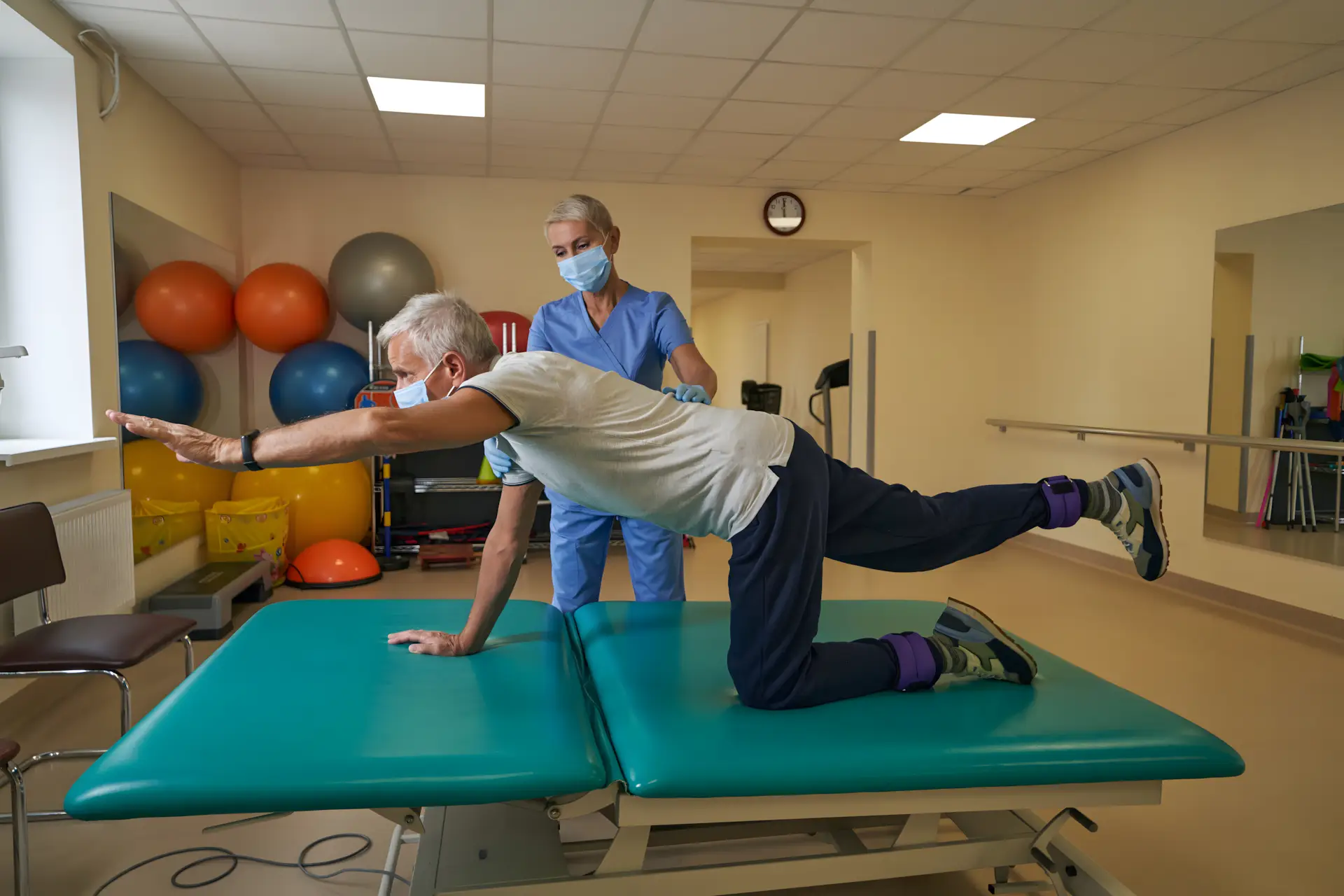
7. Strengthening & Stabilization Training
Programs include:
- Core strengthening to reduce load on the disc
- Spinal stabilization exercises for proper alignment
- Glute and hip strengthening for balanced movement
8. Flexibility & Mobility Exercises
- Hamstring, hip flexor, and lumbar stretching
- Thoracic mobility drills for improved spinal mechanics
9. Posture & Movement Retraining
- Education on safe bending, lifting, and sitting techniques
- Workstation ergonomic adjustments
10. Heat & Cold Therapy
- Heat for muscle relaxation and improved flexibility
- Cold for reducing inflammation during acute episodes
Recovery & Expectations
Many patients experience significant improvement with physiotherapy when nerve pressure and muscle imbalances are addressed.
Long-term recovery depends on strengthening core muscles, maintaining proper posture, and avoiding repetitive strain.
In Our Centre…
At AwaHope, we combine advanced physiotherapy technology, expert manual therapy, and individualized rehabilitation programs
to effectively treat intervertebral disc bulges. Our goal is to relieve pain, restore mobility,
and help patients return to daily activities with confidence and comfort.






