
What is Spondylolisthesis?
Spondylolisthesis is a condition in which one vertebra slips forward over the vertebra below it.
This slippage can occur in the cervical, thoracic, or lumbar spine, but most commonly affects the lower back.
It may result from degeneration, stress fractures, congenital defects, trauma, or spinal instability.
The condition can cause lower back pain, stiffness, nerve irritation, and difficulty performing daily activities.
Symptoms
- Lower back pain that worsens with activity
- Stiffness and reduced mobility in the lumbar spine
- Pain radiating to the buttocks or legs
- Hamstring tightness
- Numbness or tingling in the legs (if nerves are compressed)
- Weakness in the lower limbs in more advanced cases
- Difficulty standing or walking for prolonged periods
Causes of Spondylolisthesis
- Degenerative changes related to aging
- Stress fractures (spondylolysis) due to sports or repetitive strain
- Congenital vertebral defects
- Trauma or sudden impact to the spine
- Weak core and spinal stabilizing muscles
- Arthritis affecting spinal joints
- Spinal hypermobility or instability
Diagnosis
Diagnosis includes a thorough physical examination assessing posture, mobility, strength, and nerve function.
Imaging such as X-ray or MRI is often used to determine the degree of vertebral slippage and rule out related complications.
Treatment & Rehabilitation Approach
At AwaHope, rehabilitation aims to reduce pain, stabilize the spine, improve mobility, and strengthen core and hip muscles
to prevent further slippage. Treatment is individualized based on the severity of the condition and functional limitations.
Treatment Methods
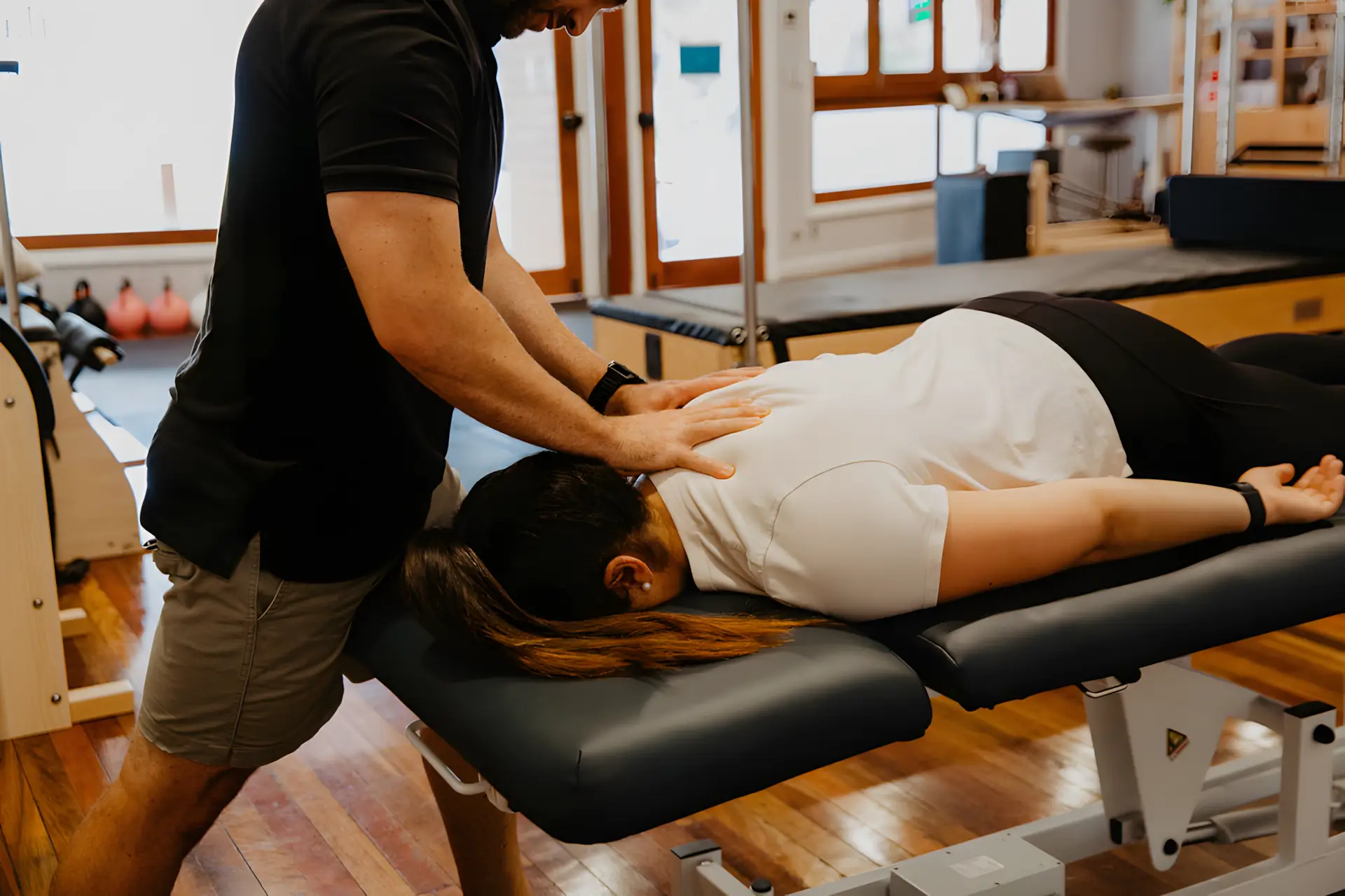
1. Manual Therapy
- Soft tissue release for tight lumbar and hip muscles
- Gentle joint mobilization to improve movement without stressing the slipped segment
- Myofascial techniques to reduce tension and improve posture
2. BTL TECAR Therapy
Reduces inflammation, improves circulation, and relaxes tight muscles around the lumbar spine to relieve pain and stiffness.
3. BTL Ultrasound Therapy
Helps decrease deep soft tissue irritation and improve mobility in affected spinal segments.
4. BTL Electrotherapy
Provides pain relief, reduces muscle spasms, and supports activation of stabilizing muscles.
5. Core Strengthening & Stabilization Training
Essential components include:
- Deep core activation exercises (transverse abdominis training)
- Lumbar stabilization drills
- Glute and hip strengthening to support pelvic alignment
- Anti-rotation and anti-extension exercises to control spinal movement
6. Flexibility & Mobility Training
- Hamstring and hip flexor stretching to reduce lumbar stress
- Gentle lumbar mobility drills within pain-free range
- Thoracic mobility exercises to reduce compensation
7. Movement & Posture Retraining
- Education on safe bending, lifting, and transitioning postures
- Gait correction if walking is affected
- Ergonomic training to reduce daily spinal strain
8. Heat & Cold Therapy
- Heat to reduce stiffness and improve muscle relaxation
- Cold to decrease inflammation during acute flare-ups
Recovery & Expectations
Many patients with spondylolisthesis improve significantly with physiotherapy when spinal stability and core strength are restored.
Mild to moderate cases respond very well to conservative treatment.
Consistency with exercises is crucial for long-term control and preventing progression.
In Our Centre…
At AwaHope, we use state-of-the-art physiotherapy modalities, expert manual techniques, and customized strengthening programs
to manage spondylolisthesis effectively. Our goal is to restore function, reduce pain, and help patients move confidently
with a stable and supported spine.






