
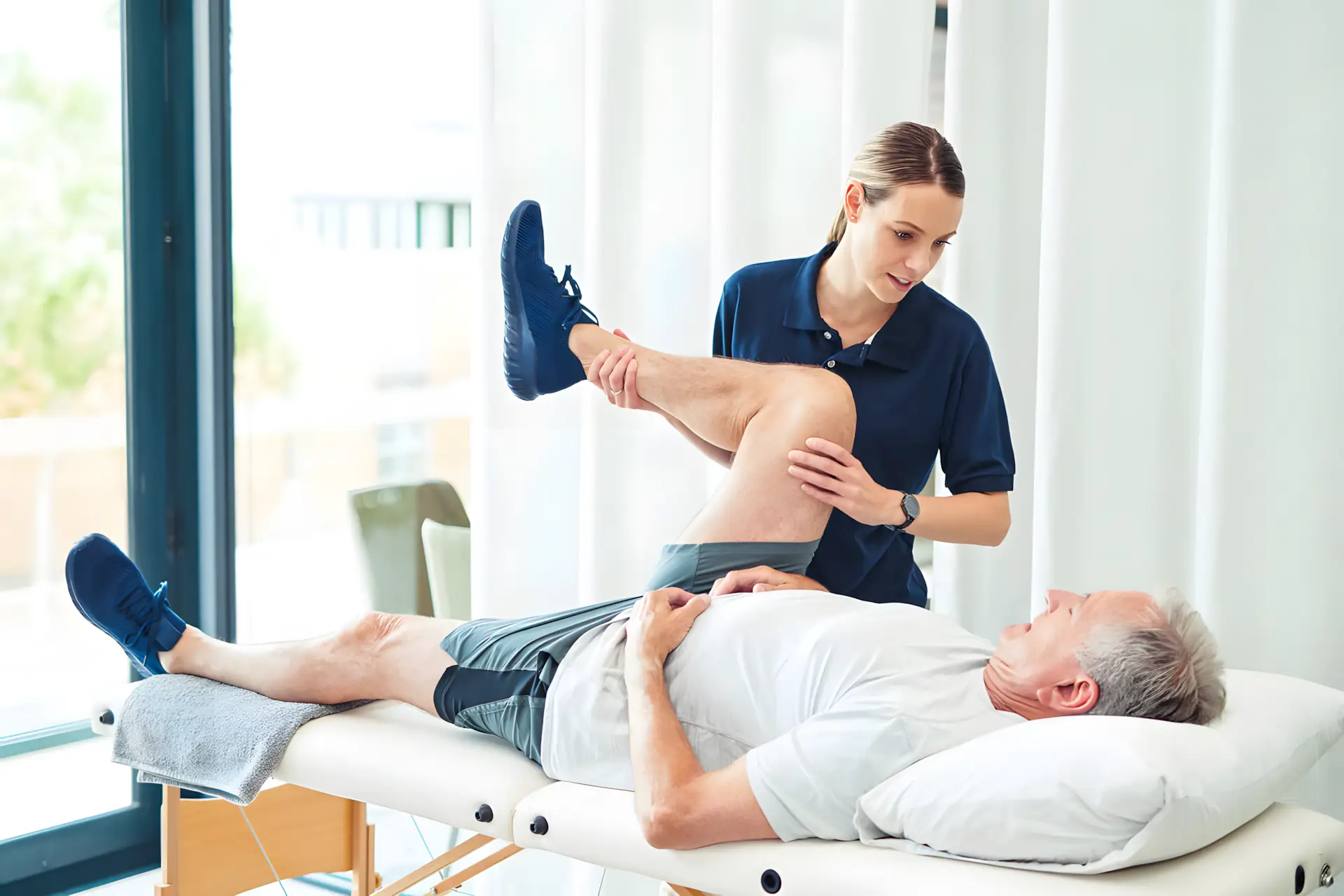
What is Post-Surgical Spine Rehabilitation?
Post-surgical spine rehabilitation is a specialized physiotherapy program designed to support recovery after spinal procedures
such as discectomy, laminectomy, spinal fusion, decompression surgery, or vertebral fixation.
The goal is to reduce pain, restore mobility, promote healing, improve strength, and help patients safely return to daily activities
with better spinal stability and function.
Symptoms & Challenges After Spine Surgery
- Pain and stiffness around the surgical site
- Reduced mobility in the neck or lower back
- Weakness in core, back, or leg muscles
- Difficulty bending, lifting, or walking
- Nerve irritation or numbness in some cases
- Fear of movement due to pain or uncertainty
- Postural imbalance and reduced flexibility
Why Rehabilitation is Important
Although surgery addresses the structural problem, physiotherapy is essential to regain full function.
Rehabilitation helps prevent re-injury, restores movement patterns, rebuilds strength, and guides patients
through a safe recovery process tailored to the specific procedure performed.
Treatment & Rehabilitation Approach
At AwaHope, our post-surgical spine rehabilitation programs follow a staged and personalized approach
based on surgeon guidelines, healing stages, and patient progress.
We prioritize safety, comfort, and gradual return to functional movement.
Treatment Methods
1. Pain Relief & Early Mobility
- Gentle guided movements to prevent stiffness
- Breathing exercises and bed mobility training
- Safe walking and posture training from early stages
2. BTL TECAR Therapy
Supports healing by increasing circulation, reducing pain, and relaxing protective muscle tension
around the surgical site (used safely depending on post-op stage and surgeon approval).
3. BTL Ultrasound Therapy
Applied carefully to reduce deep tissue irritation and support soft tissue healing around the surgical region.
4. BTL Electrotherapy
Used for pain management, reducing spasms, and improving muscle activation early after surgery.
5. Core Stabilization & Strengthening
Progressive exercises include:
- Deep core muscle activation for spinal support
- Controlled lumbar or cervical stabilization drills
- Glute and hip strengthening to improve alignment
- Upper back strengthening to support posture
6. Mobility & Flexibility Restoration
- Gentle stretching based on surgery type and phase
- Restoring safe movement patterns without stressing surgical hardware
- Improving thoracic, hip, and shoulder mobility
7. Functional Movement Retraining
- Safe bending, lifting, and transitioning techniques
- Gait retraining to improve walking mechanics
- Posture correction for daily and work activities
8. Balance & Endurance Training
- Improves overall stability and confidence
- Reduces risk of falls, especially after lumbar surgery
- Builds cardiovascular endurance gradually and safely
9. Scar Tissue Mobilization (when appropriate)
- Reduces adhesions and improves tissue flexibility
- Enhances mobility around the surgical site
10. Education & Long-Term Prevention
- Ergonomic training for home and workplace
- Activity modification to prevent re-injury
- Guidelines for safe exercise progression
- Lifestyle strategies for long-term spine health
Recovery & Expectations
Recovery time varies depending on the type of surgery, but physiotherapy significantly improves outcomes.
Most patients experience reduced pain, improved mobility, better posture, and increased strength within weeks to months.
Consistency with exercises and guided progression is key to long-term success.
In Our Centre…
At AwaHope, our post-surgical spine rehabilitation programs combine expert manual therapy, advanced physiotherapy equipment,
and personalized exercise plans to ensure a safe and effective recovery.
We support patients from early healing stages all the way to full functional return.






