
What is Degenerative Lumbar Disc Disease?
Degenerative lumbar disc disease is a condition in which the discs in the lower back gradually lose hydration, height,
and flexibility due to aging, repeated stress, or injury. As the discs deteriorate, they may cause chronic lower back pain, stiffness,
and reduced mobility. In some cases, disc degeneration can lead to nerve irritation, inflammation, or spinal instability.
Symptoms
- Chronic or intermittent lower back pain
- Pain that worsens with bending, lifting, or prolonged sitting
- Morning stiffness that improves with movement
- Pain radiating to the hips or thighs
- Muscle tightness or spasms in the lower back
- Reduced lumbar flexibility
- In advanced cases, nerve-related symptoms such as tingling or numbness
Causes of Degenerative Lumbar Disc Disease
- Natural aging and disc dehydration
- Repetitive stress or heavy physical work
- Poor posture and prolonged sitting
- Weak core and lower back muscles
- Genetic predisposition to early disc degeneration
- Previous injuries or trauma to the spine
Diagnosis
Diagnosis includes a thorough clinical assessment of posture, mobility, muscle strength, and pain patterns.
External imaging such as MRI or X-ray may be used to confirm disc degeneration and rule out other spinal conditions.
Treatment & Rehabilitation Approach
At AwaHope, treatment focuses on reducing pain, improving spinal stability, restoring movement, and slowing the progression of disc degeneration.
Rehabilitation programs are tailored to each patient’s symptoms, lifestyle, and functional needs.
Treatment Methods
1. Manual Therapy
- Soft tissue release for tight lumbar muscles
- Joint mobilization to improve spinal movement
- Myofascial techniques to reduce stiffness and enhance flexibility
2. BTL TECAR Therapy
Provides deep, targeted heat to reduce inflammation, enhance circulation, and support disc-related healing.
3. BTL Ultrasound Therapy
Helps improve soft tissue elasticity and reduce lumbar stiffness associated with degeneration.
4. BTL Electrotherapy
Decreases pain, improves muscle activation, and reduces muscle spasms.
5. Spinal Decompression Therapy
Gently stretches the spine to reduce pressure on degenerated discs and improve nerve space, decreasing pain and stiffness.
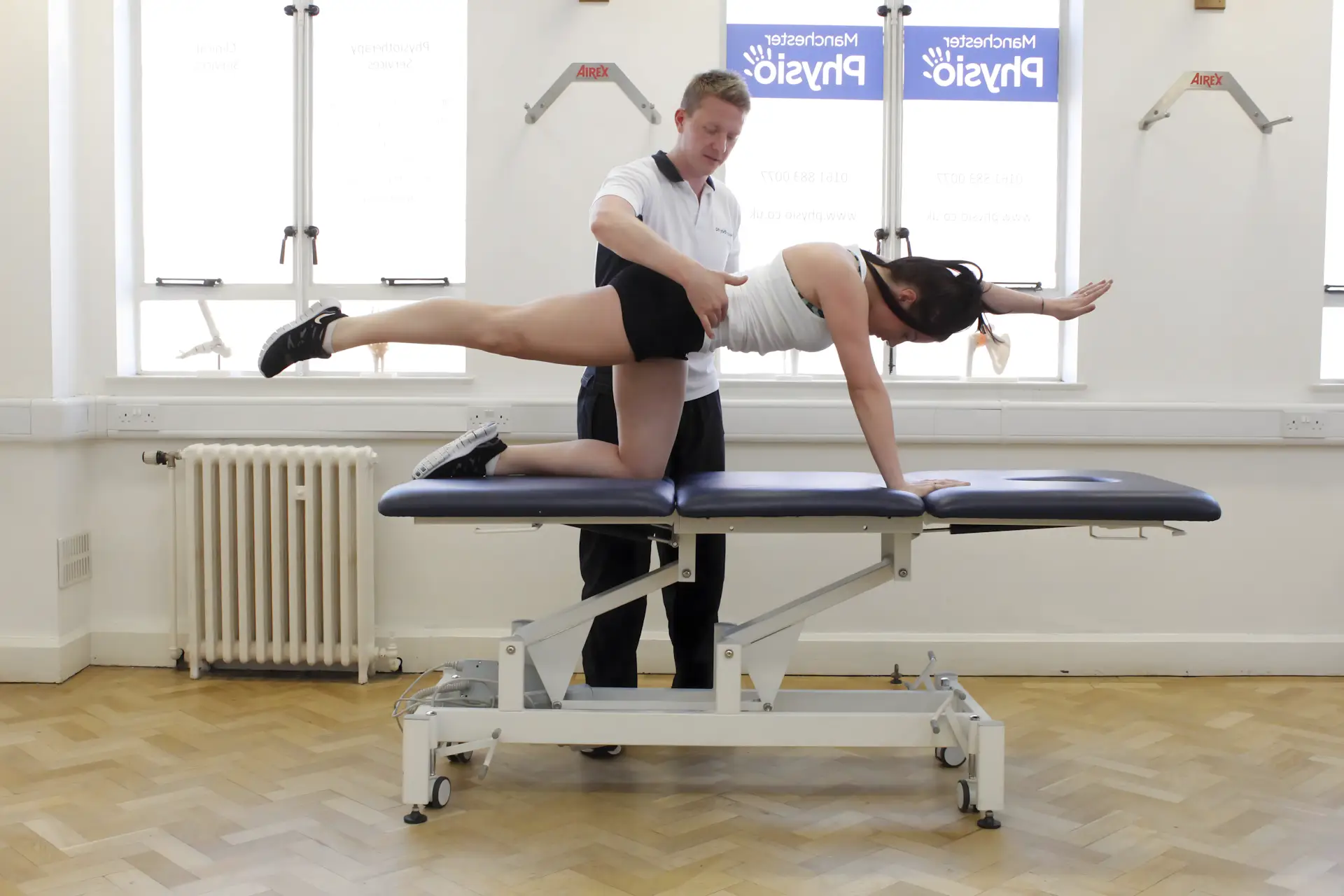
6. Exercise Therapy & Strengthening
Programs typically include:
- Core strengthening for improved spinal stability
- Lower back and hip strengthening exercises
- Mobility training for the lumbar and thoracic spine
- Flexibility exercises for tight muscles around the pelvis
- Postural correction and movement retraining
7. Ergonomic & Posture Training
- Education on proper sitting, standing, and lifting techniques
- Workspace adjustments to reduce lumbar strain
8. Heat & Cold Therapy
- Heat to relax tight muscles and improve mobility
- Cold to reduce inflammation during flare-ups
Recovery & Expectations
Although degenerative disc disease is a long-term condition, physiotherapy significantly improves pain, mobility,
and functional ability. Consistent strengthening and posture correction are key to long-term spine health.
In Our Centre…
At AwaHope, we use advanced physiotherapy equipment, skilled manual therapy, and tailored exercise programs
to manage degenerative lumbar disc disease effectively. Our goal is to relieve pain, improve spinal function,
and support long-term movement and quality of life.






