
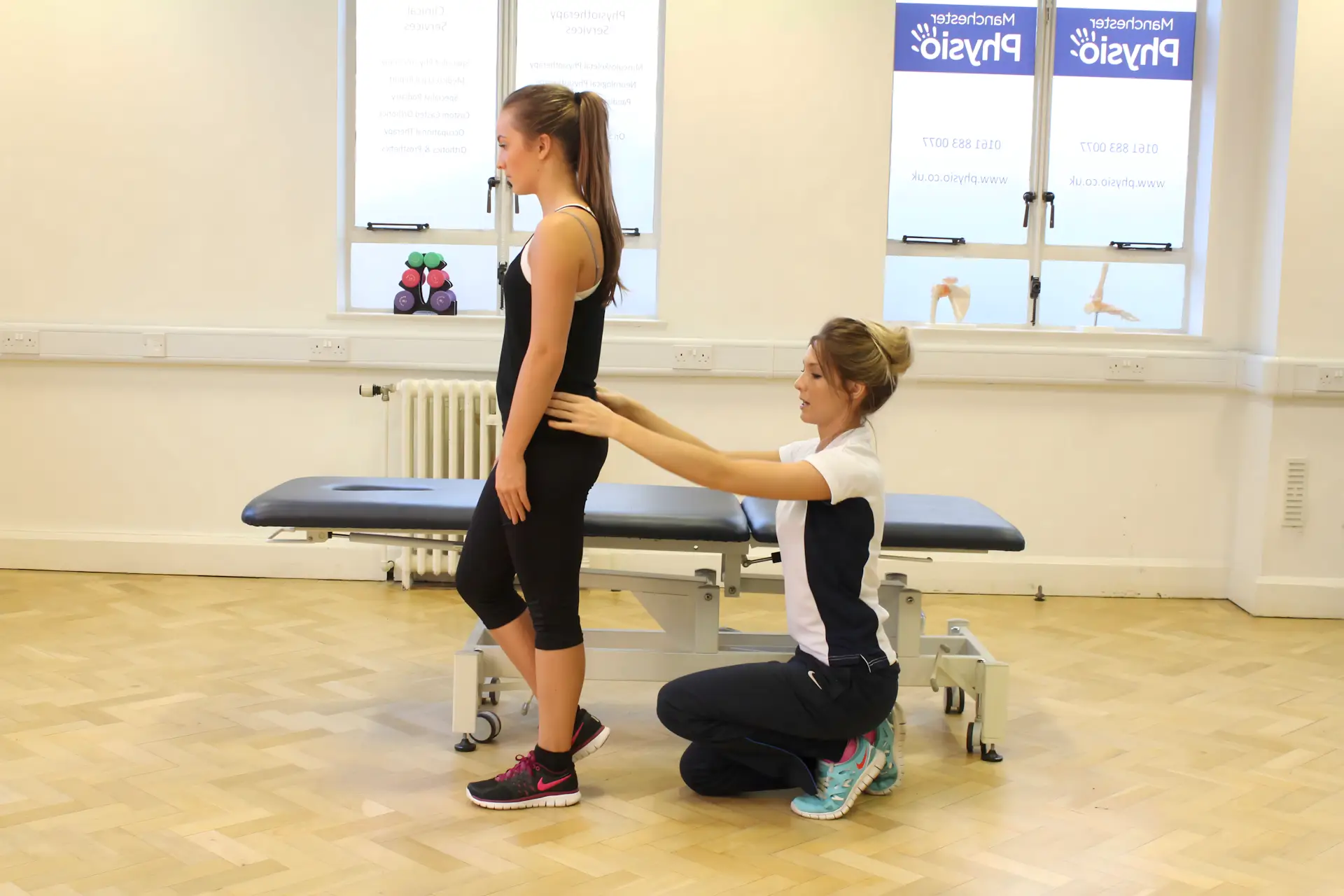
What is Kyphosis?
Kyphosis is a spinal condition characterized by an excessive forward rounding of the upper back, often leading to a hunched posture.
It may result from poor posture, muscle imbalances, spinal degeneration, developmental issues, or structural deformities.
Kyphosis can cause back pain, stiffness, fatigue, and in severe cases, difficulty breathing due to reduced chest expansion.
Symptoms
- Rounded or hunched upper back
- Back pain, especially between the shoulder blades
- Muscle tightness or fatigue in the upper and mid-back
- Decreased spinal flexibility
- Neck strain due to forward head posture
- In severe cases, breathing limitations
Causes of Kyphosis
- Poor posture and prolonged slouching
- Weak back and core muscles
- Spinal degeneration or disc wear
- Scheuermann’s disease (adolescent spinal growth disorder)
- Osteoporosis or vertebral fractures
- Congenital spinal deformities
Diagnosis
Diagnosis includes a physical assessment of posture, spinal alignment, muscle strength, and flexibility.
External imaging such as X-ray or MRI may be used to evaluate spinal curvature and determine the underlying cause.
Treatment & Rehabilitation Approach
At AwaHope, kyphosis rehabilitation focuses on improving posture, strengthening weakened muscles, increasing spinal mobility,
and reducing associated pain. Treatment plans are customized based on the severity and type of kyphosis.
Treatment Methods
1. Manual Therapy
- Spinal mobilization to improve thoracic mobility
- Soft tissue release for tight chest and upper back muscles
- Myofascial techniques to reduce stiffness and improve alignment
2. BTL TECAR Therapy
Supports tissue healing, reduces muscle tension, and enhances mobility in the thoracic and cervical spine.
3. BTL Ultrasound Therapy
Helps reduce deep muscle tightness and improves flexibility in the upper and mid-back regions.
4. BTL Electrotherapy
Reduces discomfort, improves postural muscle activation, and helps manage chronic pain.
5. Posture Correction & Strengthening Exercises
Rehabilitation programs include:
- Upper back strengthening to improve posture
- Chest stretching to correct muscle imbalances
- Core strengthening for better spinal support
- Spinal extension exercises to reduce forward curvature
- Postural training for daily activities
6. Breathing & Mobility Training
- Exercises to improve rib mobility and chest expansion
- Training to enhance thoracic flexibility and ease movement
Recovery & Expectations
Improvement depends on the cause and severity of kyphosis. Most patients experience reduced pain, better posture,
and improved mobility with consistent physiotherapy and exercise. Younger patients often respond more quickly to treatment.
In Our Centre…
At AwaHope, our rehabilitation programs focus on correcting posture, strengthening supportive muscles, and restoring functional alignment.
Using advanced physiotherapy modalities and personalized exercises, we help patients achieve a healthier, more confident posture
and long-term spine stability.






