
What is Lumbar Radiculopathy?
Lumbar radiculopathy occurs when a nerve in the lower back becomes compressed or irritated, often due to disc herniation,
degenerative disc disease, spinal stenosis, or inflammation. This condition can cause lower back pain that radiates into the hip,
leg, or foot, along with numbness, tingling, or weakness. It is commonly referred to as “sciatica” when the sciatic nerve is involved.
Symptoms
- Sharp or burning pain radiating down the leg
- Numbness or tingling in the leg or foot
- Lower back pain that worsens with bending or sitting
- Muscle weakness in the leg
- Pain that follows a nerve pathway (dermatome)
- Difficulty walking or standing for long periods
Causes of Lumbar Radiculopathy
- Herniated or bulging lumbar disc
- Degenerative lumbar disc disease
- Spinal stenosis (narrowing of the spinal canal)
- Spondylolisthesis (vertebral slippage)
- Inflammation around spinal nerves
- Repetitive stress, poor posture, or heavy lifting
Diagnosis
Diagnosis includes a physical and neurological assessment to evaluate movement, sensation, strength, and reflexes.
External imaging such as MRI or CT scan may be recommended to identify the exact cause of nerve compression.
Treatment & Rehabilitation Approach
At AwaHope, rehabilitation for lumbar radiculopathy focuses on relieving nerve pressure, reducing inflammation, restoring mobility,
and improving muscle strength to support the lumbar spine. Treatment plans are personalized to each patient’s symptoms and condition.
Treatment Methods
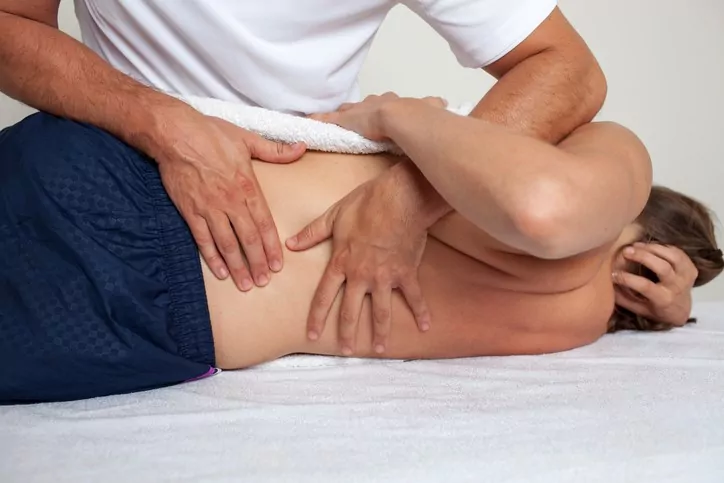
1. Manual Therapy
- Mobilization of lumbar joints to improve movement
- Soft tissue release for tight lower back and hip muscles
- Myofascial techniques to reduce tension affecting nerve pathways
2. Spinal Decompression Therapy
Gently stretches the spine to reduce pressure on compressed nerves and improve disc space, helping to relieve radiating leg pain.
3. BTL TECAR Therapy
Reduces inflammation, relaxes tight muscles, and improves circulation in the lumbar region to promote healing.
4. BTL Ultrasound Therapy
Provides deep tissue stimulation to reduce inflammation and improve flexibility in lumbar soft tissues.
5. BTL Electrotherapy
Helps relieve nerve pain, reduce muscle spasms, and improve neuromuscular function to support spine alignment.
6. Nerve Gliding Exercises
Improves nerve mobility and reduces symptoms such as tingling, numbness, and radiating pain.
7. Strengthening & Stabilization Exercises
Programs include:
- Core strengthening for improved spinal support
- Lower back and hip strengthening exercises
- Posture and movement retraining
- Functional exercises to improve daily mobility
8. Flexibility & Mobility Training
- Gentle stretching of hamstrings, hip flexors, and gluteal muscles
- Mobility exercises to improve lumbar and pelvic function
9. Heat & Cold Therapy
- Heat for tight muscles and mobility improvement
- Cold to reduce nerve inflammation during acute episodes
Recovery & Expectations
Many patients experience significant relief with consistent physiotherapy. Addressing the root cause of nerve compression and
strengthening the supporting muscles are essential for long-term recovery and preventing recurrence.
In Our Centre…
At AwaHope, we combine advanced physiotherapy equipment, skilled manual therapy, and tailored exercise programs
to effectively treat lumbar radiculopathy. Our goal is to relieve nerve pain, restore functional movement,
and help patients return to daily life with comfort and confidence.






