
What is Facet Joint Syndrome?
Facet Joint Syndrome occurs when the small joints that connect the vertebrae in the spine become irritated, inflamed, or degenerated.
These joints help stabilize the spine and allow smooth movement. When affected, they can cause localized back or neck pain, stiffness,
and reduced mobility. Facet joint pain is common in both the cervical (neck) and lumbar (lower back) regions and can worsen with certain
movements or prolonged positions.
Symptoms
- Localized neck or lower back pain
- Pain that worsens with extension (bending backward)
- Stiffness after prolonged sitting or standing
- Reduced spinal mobility
- Radiating pain to shoulders, buttocks, or thighs
- Muscle spasms around the affected joints
- Pain triggered by twisting or bending
Causes of Facet Joint Syndrome
- Degenerative changes due to aging
- Poor posture placing extra stress on spinal joints
- Repetitive twisting or bending movements
- Previous back or neck injuries
- Weak core and spinal stabilizing muscles
- Spinal misalignment or disc degeneration
- Inflammation or joint irritation
Diagnosis
Diagnosis involves assessing spinal mobility, joint tenderness, posture, and pain response to specific movements.
External imaging such as X-ray or MRI may be used to confirm facet joint changes or rule out related conditions.
Treatment & Rehabilitation Approach
At AwaHope, rehabilitation focuses on reducing joint irritation, restoring spinal mobility, strengthening supporting muscles,
and improving posture to reduce stress on the facet joints.
Treatment Methods
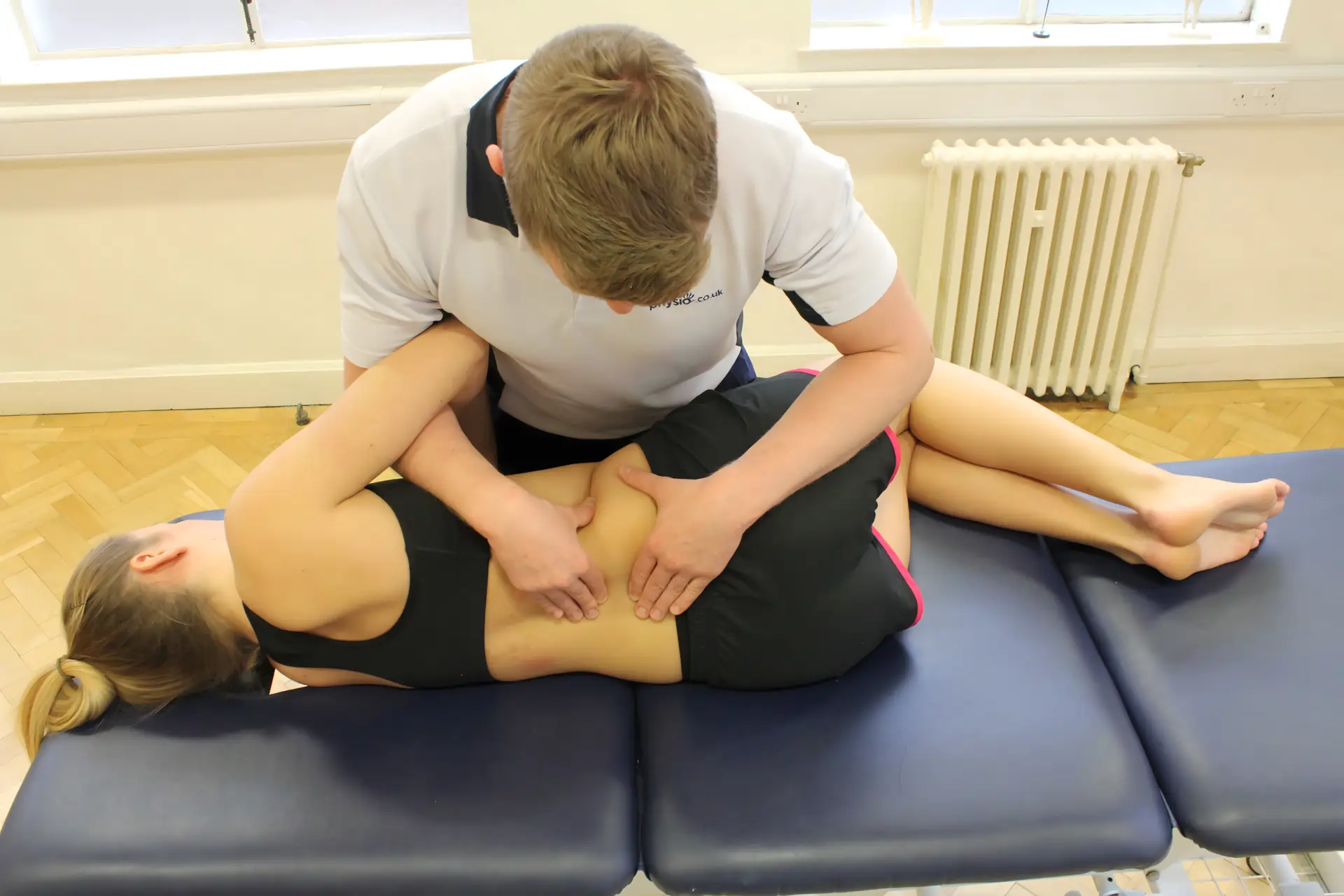
1. Manual Therapy
- Joint mobilization to improve facet joint movement
- Soft tissue release for tight spinal and hip muscles
- Myofascial techniques to reduce surrounding tension
2. BTL TECAR Therapy
Provides deep heat that reduces inflammation, relaxes muscles, and improves blood flow around irritated facet joints.
3. BTL Ultrasound Therapy
Helps relieve deep tissue irritation and improve flexibility in the affected segments.
4. BTL Electrotherapy
Reduces pain, decreases spasms, and supports neuromuscular activation in nearby stabilizing muscles.
5. Spinal Mobility & Flexibility Training
- Exercises to improve thoracic and lumbar flexibility
- Stretching hip flexors, hamstrings, and lower back muscles
- Controlled spinal mobility drills to reduce stiffness
6. Strengthening & Stabilization Exercises
Programs include:
- Core strengthening to reduce load on facet joints
- Glute and hip strengthening for better spinal alignment
- Upper back strengthening for posture correction
7. Posture & Movement Retraining
- Correcting movement patterns that irritate the joints
- Guidance on lifting, bending, and sitting postures
- Ergonomic education for work and daily life
8. Heat & Cold Therapy
- Heat for relieving stiffness and muscle tightness
- Cold for reducing inflammation during flare-ups
Recovery & Expectations
Many patients experience relief through a combination of manual therapy, strengthening, and postural correction.
Long-term improvement depends on maintaining strong core muscles and using proper movement techniques to avoid joint overload.
In Our Centre…
At AwaHope, we use advanced physiotherapy technologies, skilled manual techniques, and customized exercise programs
to effectively treat facet joint syndrome. Our goal is to reduce pain, restore mobility, and support long-term spinal health.






